

IVC Filter Placement & Removal
IVC Filter Placement & Removal
Overview
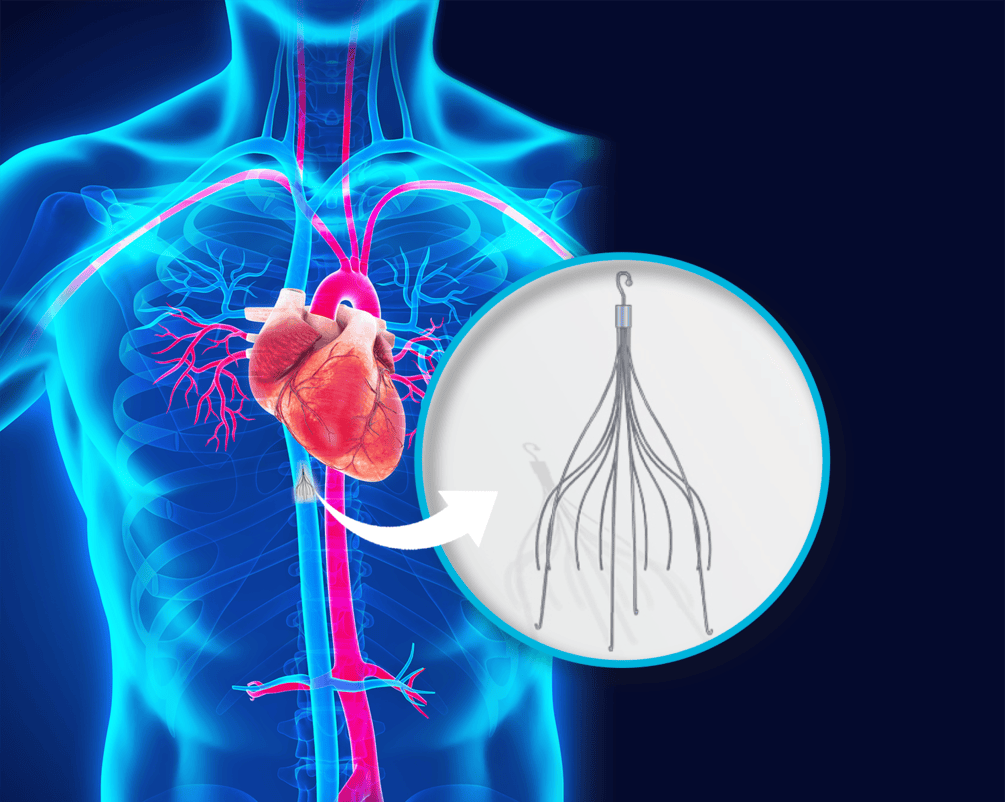
IVC (Inferior Vena Cava) Filter Placement is a minimally invasive procedure performed to help prevent life-threatening pulmonary embolism in patients who are at high risk of blood clots traveling from the legs to the lungs. The inferior vena cava is the large vein that carries blood from the lower body back to the heart. An IVC filter is a small, cage-like medical device that is carefully placed inside this vein to capture blood clots before they reach the lungs. While these filters can provide important protection in specific situations, they are often intended to be temporary. Once the risk of clot migration has reduced, the filter may be safely removed through a specialized minimally invasive procedure. Proper evaluation by an experienced cardiovascular specialist is essential to determine whether IVC filter placement or removal is the most appropriate treatment for each patient.
Causes
IVC filter placement is generally recommended for patients who have deep vein thrombosis (DVT) or pulmonary embolism and cannot safely take blood-thinning medications due to active bleeding, recent surgery, or certain medical conditions. It may also be advised for individuals who continue to develop blood clots despite appropriate anticoagulant therapy or those at exceptionally high risk of clot formation after major trauma or complex surgical procedures. In some cases, temporary filters are placed as a preventive measure until the patient’s condition stabilizes and conventional treatment can be resumed. Once the underlying risk has resolved, timely removal of the filter is often recommended to minimize long-term complications.
Symptoms
Most patients requiring an IVC filter already have symptoms related to blood clots rather than symptoms caused by the filter itself. Deep vein thrombosis may present with swelling, pain, warmth, redness, or tenderness in one leg, while pulmonary embolism can cause sudden shortness of breath, chest pain, rapid heartbeat, dizziness, or coughing up blood. After filter placement, many patients do not experience any noticeable symptoms. However, persistent leg swelling, new pain, abdominal discomfort, or unusual symptoms following the procedure should be promptly evaluated by a healthcare provider to rule out complications.
Diagnosis
Before recommending IVC filter placement or removal, a cardiologist or vascular specialist performs a detailed clinical assessment along with appropriate imaging studies. Ultrasound is commonly used to detect blood clots in the legs, while CT scans or CT pulmonary angiography help identify pulmonary embolism. Venography may be performed during the procedure to clearly visualize the inferior vena cava and ensure accurate filter positioning. Prior to filter removal, imaging studies are often repeated to confirm that the filter can be safely retrieved and that no significant clots remain trapped within the device.
Treatment Options
The treatment approach depends on the patient’s overall condition, clotting risk, and ability to receive anticoagulant medications. During IVC filter placement, a thin catheter is inserted through a vein in the neck or groin under local anesthesia and imaging guidance. The filter is then positioned inside the inferior vena cava to intercept blood clots while allowing normal blood flow. When the risk of pulmonary embolism has decreased, the filter can often be removed using another minimally invasive catheter-based procedure. In addition to filter management, patients may receive blood-thinning medications, compression therapy, and treatment for the underlying cause of clot formation to reduce the risk of future complications.
Post-Treatment Care
Recovery after IVC filter placement or removal is generally quick, with most patients returning home the same day or within a short observation period. Patients are advised to keep the catheter insertion site clean and dry, avoid strenuous physical activity for a brief period, and follow all medication instructions carefully. Regular follow-up appointments are important to monitor recovery and determine the appropriate timing for filter removal if a temporary device has been used. Maintaining a healthy lifestyle, staying physically active as recommended, and adhering to prescribed anticoagulant therapy can significantly reduce the risk of future blood clots.
Risks or Complications
IVC filter placement and removal are considered safe procedures when performed by experienced specialists, but like any medical intervention, they carry certain risks. Possible complications include bleeding, infection, bruising at the catheter insertion site, filter migration, tilting of the filter, blockage of the inferior vena cava, fracture of filter components, or difficulty retrieving the filter after prolonged placement. Rarely, trapped clots may obstruct blood flow or the filter may penetrate the vein wall. Careful patient selection, timely follow-up, and removal of temporary filters when no longer needed help minimize these risks.
When to See a Doctor
Patients should seek immediate medical attention if they experience sudden chest pain, difficulty breathing, coughing up blood, severe leg swelling, persistent leg pain, fainting, or signs of a possible pulmonary embolism. Medical evaluation is also important if there is redness, swelling, fever, excessive bleeding, or persistent pain at the catheter insertion site after the procedure. Individuals with an IVC filter should attend all scheduled follow-up appointments, as regular monitoring ensures the device continues to function properly and allows timely removal when it is no longer required. Early consultation with a cardiologist can help prevent serious complications and support long-term cardiovascular health.
Explore more:
Explore Our Specialities
Your heart deserves expert care, every beat of the way.
Our Services
Healthy hearts create healthier lives. We combine advanced diagnostic technology, evidence-based treatments, and personalized care to prevent, diagnose, and manage heart conditions with precision and compassion.
Don’t Ignore Your Symptoms
Get timely diagnosis and expert treatment for lasting relief.